
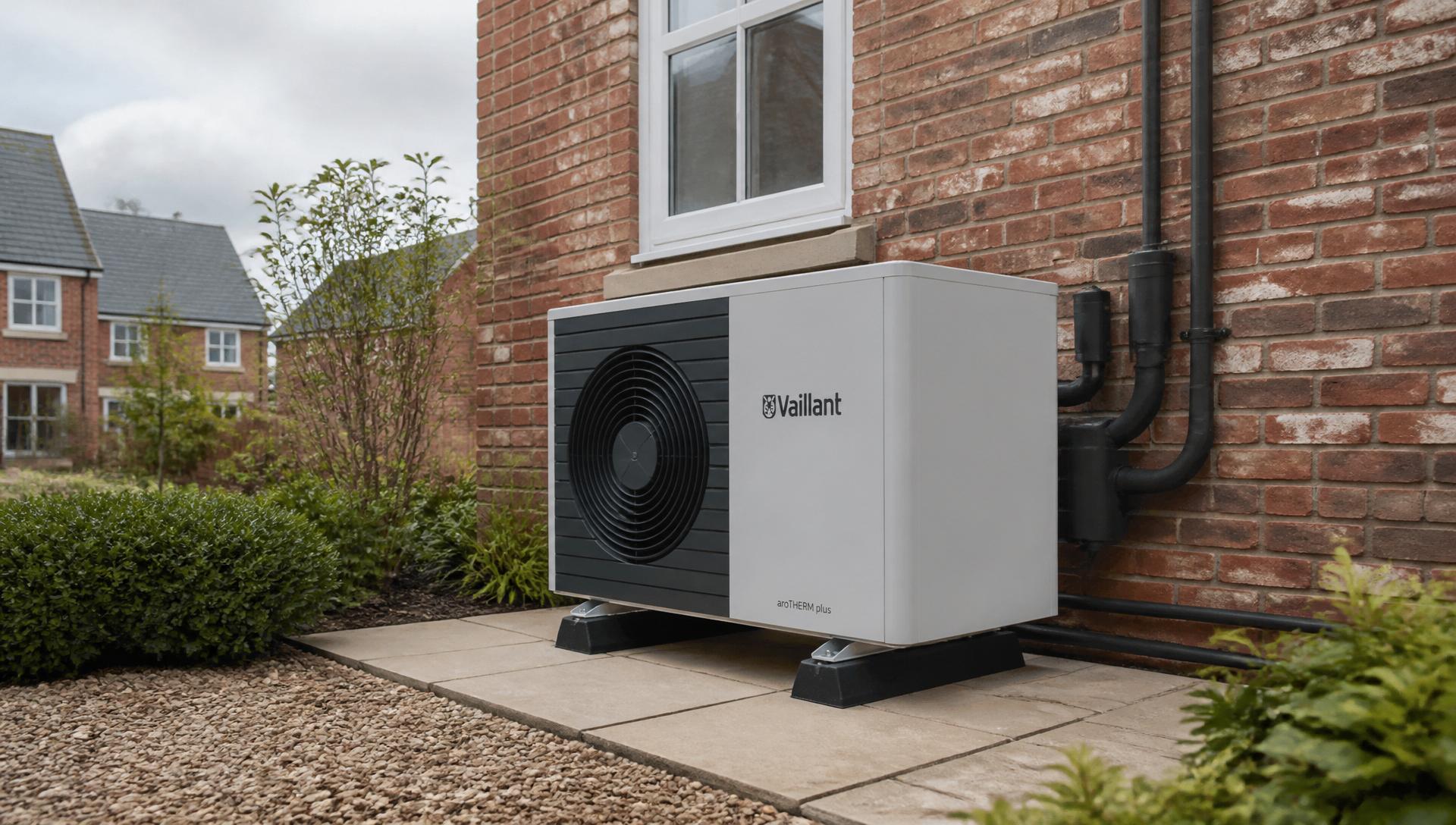
Air source heat pump outdoor unit installed against a red-brick British house
Air source heat pumps

Air source heat pumps —up to £7,500 off through theBoiler Upgrade Scheme.

Low-carbon heating done properly: full design, MCS-certified install via our Q-Smart partnership, and honest advice about whether a heat pump is genuinely the right move for your home in Greater Manchester.

Q-Smart partnership · Up to £7,500 BUS grant · No hard sell

Gas Safe
Reg. 636807
3rd generation
Family-run engineers
ATAG approved
Up to 18-yr warranties
24-hour quotes
Mon–Sat · 8am–6pm
£5m cover
Public liability insured
Service overview

What we do, who it's for, and when it matters.

What it is

An air source heat pump (ASHP) is a low-carbon replacement for a gas or oil boiler. It extracts heat from outside air, upgrades it with electricity, and delivers it to your radiators or underfloor system and hot water cylinder. When designed and installed correctly, it heats a well-insulated home for a fraction of the CO₂ of a gas boiler.

Who it's for

Homeowners planning to stay put for 8+ years, off-grid properties currently on oil or LPG, self-builders, and anyone extending or renovating who's already opening up floors and can spec the emitters and cylinder correctly from day one.

When you need it

When your existing boiler is nearing end of life, when energy bills and carbon are decisions you want to make once, and while government funding (Boiler Upgrade Scheme, up to £7,500) is available for eligible households.

Why professional matters

Heat pumps are not gas boilers. They run cooler, longer and steadier — which means system design (radiator sizing, flow temperatures, cylinder sizing, controls strategy) is the make-or-break. Cheap, badly designed installs give heat pumps a bad reputation. Proper design gives you a system that quietly works.

The cost of leaving it

Small problems don't stay small.

The horror stories about heat pumps almost all trace back to the same cause: a like-for-like swap without redesigning the emitters, controls and cylinder. If it's a bad idea for your property, we'll tell you. If it's a good idea, we'll do the sums properly.

Undersized radiators

Heat pumps deliver heat at lower flow temperatures. Radiators sized for a 70°C boiler flow won't put out enough heat at 45–50°C. The house feels cold, the pump runs constantly, and bills climb.

Missing grant deadlines

The Boiler Upgrade Scheme has finite budget and evolving rules. Delaying a decision often means less grant, or more admin, than acting inside a current, funded window.

Poor design = bad reviews

Poorly designed systems give heat pumps a reputation they don't deserve — cold rooms, noisy fans, huge bills. Design is the difference.

Wrong cylinder, cold showers

Undersized or old vented cylinders don't work with heat pumps. You need a correctly sized, low-loss unvented cylinder rated for the pump's flow temperatures.

Common mistakes we see

  • Swapping a boiler for a heat pump without upgrading radiators.
  • Placing the outdoor unit against a boundary wall or under a bedroom window.
  • Skipping the heat-loss survey and using a rule-of-thumb kW figure.
  • Ignoring the electricity tariff — a smart tariff transforms running cost.
  • Not weather-compensating the flow temperature.
  • Keeping the old thermostat instead of pump-aware controls.
Our process

A tidy, engineered process — no surprises.

Every job follows the same disciplined sequence, so you always know where we are and what's next.

  1. Step 1

    Eligibility & desktop review

    We check property type, existing system, insulation basics, and BUS eligibility before you commit to anything. If a heat pump isn't right for you, we say so.

  2. Step 2

    Full home survey & heat-loss

    A room-by-room heat-loss calculation, radiator/emitter audit, mains flow test, cylinder review, outdoor-unit siting and noise assessment.

  3. Step 3

    System design & fixed quote

    Written design with sizing, emitter changes, cylinder spec, controls strategy, plus a fixed price and grant paperwork walk-through via our Q-Smart partnership.

  4. Step 4

    MCS-certified install

    MCS-certified installation, commissioning to design flow temperatures, weather compensation set up, and cylinder integration completed.

  5. Step 5

    Handover, monitoring & support

    Walk-through, controls training, warranty registration, and ongoing support. We come back if performance drifts.

What you get

Specific outcomes — not vague promises.

Up to £7,500 BUS grant

Eligible households can claim the full Boiler Upgrade Scheme grant via our Q-Smart partnership — handled as part of the install.

Lower carbon heating

Typically a fraction of the CO₂ per kWh of gas heat once the grid electricity mix is factored in.

Quiet, steady comfort

Correctly designed systems hold temperature all day at lower flow temps — no boiler on-off cycling, no cold-morning blasts.

Cheaper hot water on smart tariffs

Cylinder reheats scheduled onto off-peak electricity via a compatible smart tariff can dramatically reduce hot water cost.

Compatible with underfloor heating

Heat pumps and underfloor heating are made for each other — low flow temp, high radiant efficiency, even comfort.

Design that ages well

Correctly sized emitters, cylinder and controls give you a system that still works well in year 10, not one you regret in year 2.

Heat-loss surveys and design

Every install starts with a room-by-room heat-loss survey — U-values estimated from fabric, air-change losses, orientation and shading. That drives the pump kW, the design flow temperature, and every radiator / underfloor circuit output. Guessing at kW from the old boiler rating is how heat pumps end up undersized (cold house) or oversized (short-cycling, expensive).
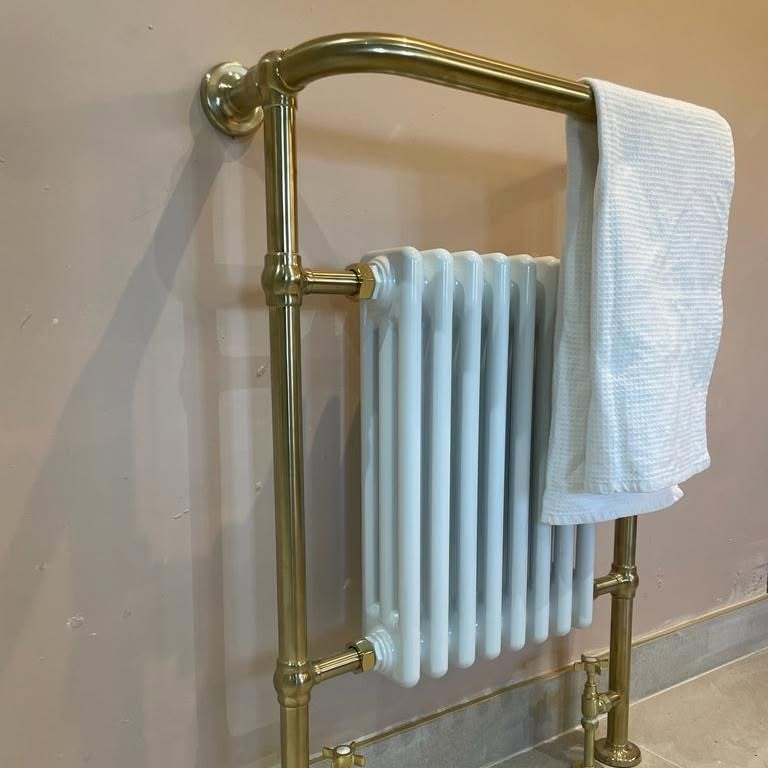
Radiators, emitters and underfloor heating

Heat pumps prefer lower flow temperatures. That usually means larger radiators in a few key rooms (or underfloor heating on a new floor), not every radiator changed. We identify which emitters need upsizing and which are already big enough — a proper audit saves unnecessary spend.

  • K3 double-panel double-convector radiators where uprating is needed
  • Retrofit underfloor heating on refurb floors
  • Type-2 aluminium radiators where wall space is limited
  • Retained existing radiators where the room heat-loss allows

Cylinder, hot water and Legionella

Heat pumps pair with unvented cylinders sized to the household — typically 210L to 300L for a family home. Cylinders are speced for the pump's flow temperatures, with weekly Legionella cycles built into the controls. Reheat schedules can be shifted onto off-peak electricity via a smart tariff to cut running cost.

Outdoor unit siting and noise

The outdoor unit needs clearance for airflow and access for service. We check distance to boundaries, noise assessment against MCS/permitted development rules, and pick a location that avoids bedroom windows and awkward pipe runs. Vibration mounts and correct condensate drainage prevent long-term nuisance.

Controls, weather compensation and smart tariffs

Weather compensation is not optional — it lets the pump run at the lowest possible flow temp for the outside conditions, which is how running cost stays low. Pair with a smart tariff (Octopus Cosy, Agile or equivalent), schedule the cylinder onto cheap periods, and the sums start to look very different.

Boiler Upgrade Scheme & Q-Smart partnership

Eligible homeowners in England and Wales can claim up to £7,500 towards an ASHP install via the government's Boiler Upgrade Scheme. We handle the eligibility check and application via our Q-Smart partnership, which provides the MCS certification required for the grant.

FAQs

Straight answers to the questions we hear most.

How much does an air source heat pump cost?+

Total cost depends on property size, emitter upgrades and cylinder work. Eligible customers can claim up to £7,500 through the Boiler Upgrade Scheme via our Q-Smart partnership, which is deducted from the price. We give a written fixed quote after a full survey.

Am I eligible for the £7,500 grant?+

The Boiler Upgrade Scheme has criteria around property type, EPC recommendations and system replacement. We check eligibility for you as part of the initial review — no charge, no obligation.

How long does installation take?+

A straightforward install is typically 3–5 days on site once materials are delivered. Larger installs with underfloor heating or extensive emitter upgrades run longer. Design and grant paperwork happen before we start on site.

Will a heat pump keep my house warm in winter?+

Yes — when correctly designed to your heat loss and paired with correctly sized emitters. British winters are well within the operating range of modern ASHPs; the trick is design, not the technology.

Are heat pumps noisy?+

Modern units run at conversational volume outside and are inaudible from most rooms indoors. Correct siting keeps them well within permitted development noise limits.

What happens if the heat pump breaks down?+

Warranties are typically 5–7 years depending on manufacturer, backed by MCS installer support and our service team. Modern heat pumps are highly reliable when correctly installed.

Do I need a new radiator every room?+

Usually not. A proper heat-loss audit identifies which rooms need uprating and which are already fine. We size the change to what's genuinely needed.

Can I combine a heat pump with solar panels?+

Yes. PV plus a heat pump is a natural pairing, especially with a hot-water cylinder that can absorb midday solar generation. We can design the controls to make the most of both.

Do you cover Rochdale, Oldham and Manchester?+

Yes — we cover Rochdale, Oldham, Manchester, Salford, Bury, Ashton-under-Lyne and surrounding Greater Manchester areas via our Q-Smart partnership for MCS certification.

How long do heat pumps last?+

A well-designed and installed air source heat pump typically lasts 15–20 years with annual servicing, comparable to a gas boiler.

Ready when you are

Find out if a heat pump makes sense for your home — before you spend a penny.

We'll check BUS eligibility, run a heat-loss review, and give you an honest answer. If a heat pump is right for your property, we'll design and install one that actually works. If not, we'll tell you.

Get my free quote Call 07582 870312

Gas Safe Reg. 636807 · £5m public liability · Mon–Sat 8am–6pm

Explore more

Related services & pages

One team, one standard — across every plumbing and heating job in Greater Manchester.